The United States covers more geographic and cultural ground than most people realize until they start moving through it. Desert canyons and Atlantic barrier islands. Bayou cities with French street names and Midwestern towns that run on bourbon and limestone. Urban architecture, you can spend a week photographing, and coastlines you’d fly across the country just to sit on. The list below pulls from cities, natural areas, and a few destinations that don’t always make the first cut but probably should. It’s not exhaUStive, but it’s a working guide for people who are actually planning US Travel Destinations.

Our List of the Most Popular US Travel Destinations
New York City, New York
New York City doesn’t need much of an introduction, and there’s really no way to write about it without reaching for words that sound overused. It is fast, expensive, loud, and beautiful in a way that is hard to separate from the noise. What makes it worth the trip, is the sheer density of things happening at once. International food at every price point, neighborhoods that shift character every few blocks, world-class museums, parks, live music, architecture, and more to do than any one visit will cover.
Four to five days is a solid amount of time, enough to move through a few neighborhoods properly rather than trying to check off every landmark. Central Park, the Statue of Liberty, and the major museums are all worth it, but so is just walking, the High Line, SoHo, the Lower East Side, picking a direction and going.
December is a particular time to visit if you can handle crowds. Rockefeller Center lit up, the city decorated, the energy is genuinely different. The downside is that everyone else had the same idea. For a more manageable visit, September and October strike the better balance, still warm enough, less packed.
Good side trips if you have extra time: the Hudson Valley for wineries, trails, and state parks along the river. The North Fork of Long Island is quieter vineyard country. The Hamptons are best in the shoulder season when it drops back to its actual self.
Washington, D.C.
Washington is one of those cities that tends to get underestimated as a travel destination, treated more like an obligation than a place people actually want to go. That’s a mistake. The monuments and memorials are legitimately powerful in person. The Lincoln Memorial, the Vietnam Wall, the Jefferson Memorial at the water, are best experienced in a way that photographs don’t really communicate.
Arlington National Cemetery deserves more time than most people give it. If you can time your arrival for the changing of the guard at the Tomb of the Unknown Soldier, do it. The whole cemetery is worth wandering, the simplicity of the headstones, the Kennedy graves, the Challenger crew memorial.
The Smithsonian museums are free and collectively enormous, the National Air and Space Museum, the National Museum of American History, and the National Archives, where the actual Constitution and Declaration of Independence are housed behind glass. You could spend a full week here and not run out of things to do. The restaurant scene has improved considerably over the past decade, and the neighborhoods outside the National Mall, Adams Morgan, Georgetown, and Capitol Hill, are worth time on their own.
Chicago, Illinois
Chicago is the third-largest city in the country, and it feels like it, but in a different way than New York. It sits on Lake Michigan, which looks like an ocean from the shoreline, and the architecture downtown is among the best in any American city.
The Chicago Riverwalk is a consistent highlight, the river runs a vivid blue-green through the city, and the buildings lining it are worth photographing at multiple times of day. The Wrigley Building, the Tribune Tower, and the Cultural Center’s Tiffany dome. The food and bar scene is serious enough to give the coasts a run, which surprises people who haven’t been. Deep dish is fine, but the city’s restaurant range goes well beyond that.
One thing to keep in mind: neighborhoods like Logan Square and Wicker Park are well-reviewed, but they reward knowing what you’re going specifically for rather than just wandering. Do a bit of research before you go, rather than expecting them to reveal themselves.
New Orleans, Louisiana
New Orleans is small for a city that has generated so much mythology. The French Quarter, the music, the food, Mardi Gras, there’s a tourist version of all of it that’s easy to get stuck in, and then there’s the actual city underneath that, which is worth finding. Frenchmen Street over Bourbon Street if you want to hear real jazz. The neighborhoods past the Quarter for the architecture. The food is genuinely its own thing — Creole and Cajun traditions that developed in a specific place and don’t translate cleanly anywhere else.
The history here is significant and layered. Spanish and French colonial influence shows in the architecture and street grid. It’s worth going in with some context rather than treating it purely as a party destination, though the party element is real, and it’s also fine.
Spring and fall are the better times to visit in terms of heat and crowds. Avoid Mardi Gras unless that’s specifically what you’re there for.

Miami, Florida
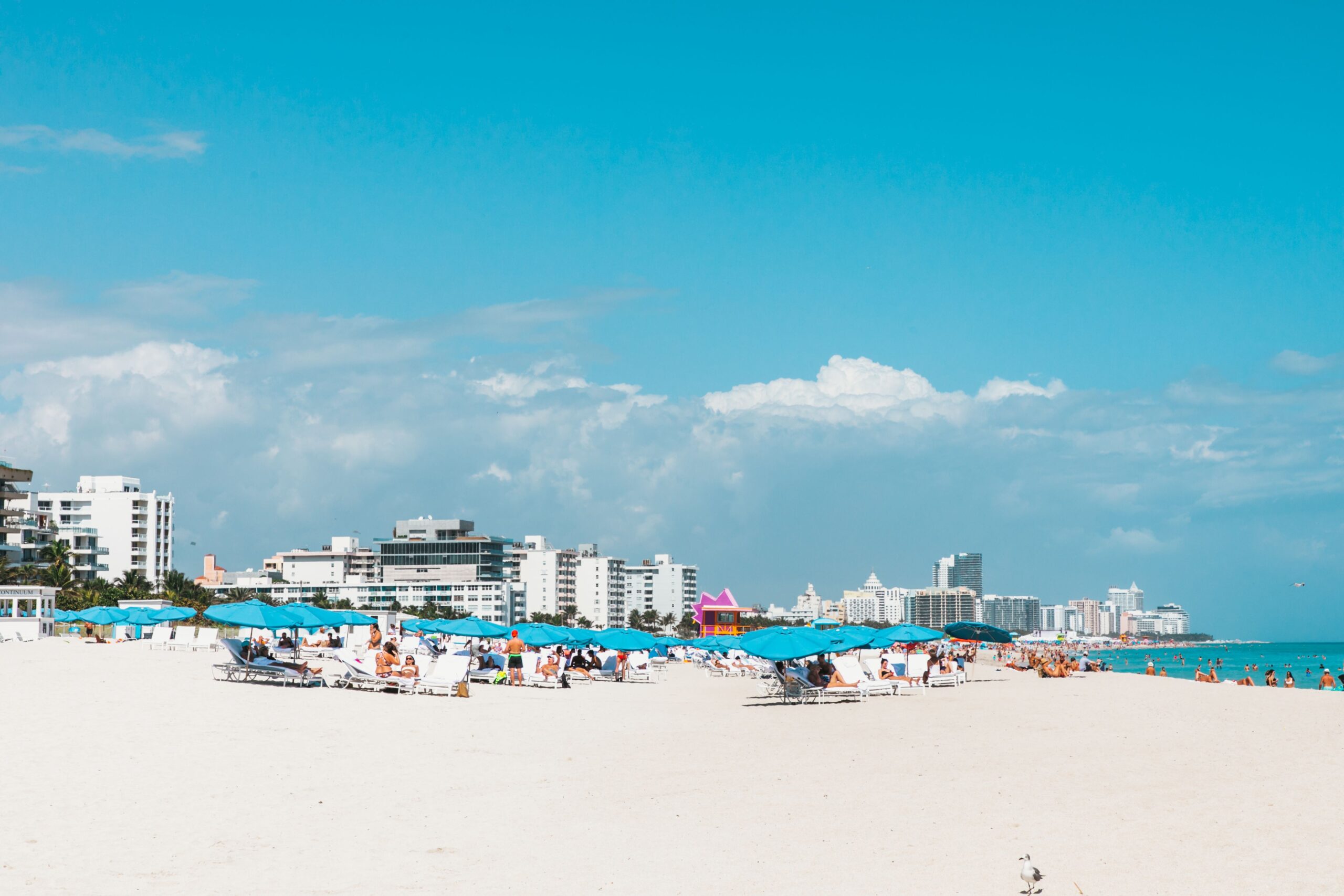
Miami, Florida, tends to be undersold by its own reputation. The mega-club, spring break version of the city exists and is easy to encounter, but it’s not the whole picture. South Beach has genuinely beautiful white sand and warm, clear water, and Ocean Drive’s Art Deco strip is well-preserved in a way that’s unusual for a beachfront area that could easily have been redeveloped out of existence. Wynwood is one of the better arts districts in the country, with murals, galleries, restaurants, bars, worth an afternoon minimum. Little Havana is the real thing, not a themed reconstruction, and the food there is excellent.
If heat isn’t a deterrent, July and August are actually a good time to visit. Rates drop, crowds thin considerably, and South Beach becomes something closer to what it was before it got famous. The tradeoff is humidity and afternoon storms, both of which are manageable.
Charleston, South Carolina
Charleston doesn’t come up first when most people plan a first trip to the US, but it should be higher on that list than it is. The historic district is the largest in the country, and walking it, especially the area around The Battery and the harbor, is one of the better urban walking experiences anywhere in the South. The food scene is a serious draw, from low-country cooking in casual spots to well-regarded fine dining. People are genuinely friendly in a way that isn’t forced.
The history here requires more than surface engagement. Charleston was the largest slave trading port in the United States, and much of the architectural beauty people come to see was built on that history. Fort Sumter, where the Civil War began, is a short ferry ride from the waterfront and worth the trip. Going without engaging the weight of that history means missing a significant part of what the city actually is.
Spring is the peak season for good reason, mild weather, the city in bloom. Fall is quieter and nearly as good.
The Pacific Coast Highway — Big Sur and the California Coast
The stretch of Highway 1 between San Francisco and Los Angeles is one of the better road trip routes in the world, not just in the country. Big Sur is the obvious centerpiece, the coastline drops dramatically into the Pacific, the redwoods come down to the cliffs, and on a clear day, it’s the kind of scenery that stops conversation. Carmel-by-the-Sea is small and worth a stop. Monterey has the aquarium and Cannery Row. Santa Barbara and Malibu come in further south. The Santa Maria Valley has wineries. Solvang, the Danish-style town inland, is genuinely odd and interesting.
The drive itself takes anywhere from a day to a week, depending on how much you stop. Cell coverage is unreliable in stretches, which is either a problem or a feature. Highway 1 occasionally closes due to landslides or fires, so check current road conditions before planning around specific sections.
Los Angeles, California
Los Angeles sprawls in a way that requires planning, it’s not a city you can meaningfully walk through, it’s a collection of neighborhoods connected by freeways. That’s a feature for some trips and a frustration for others. The Griffith Observatory gives you one of the best views of the city and the hills, and the hike up is worth it. Runyon Canyon for another angle on the landscape. Santa Monica Beach is reliably beautiful against the mountain backdrop. The Warner Bros. studio tour is one of the better behind-the-scenes experiences in the city if that kind of thing interests you.
The food is excellent, and the dining scene is more diverse than people expect. Three days give you enough time to move through a few different neighborhoods and get a real sense of it. A week would be better.
San Francisco, California
San Francisco is expensive, uneven, and genuinely fascinating. The neighborhood changes are abrupt, you can walk six blocks and feel like you’ve crossed into a different city. The Mission for murals and food, the Castro for its history, Hayes Valley, the Haight, and North Beach. The farm-to-table food movement that’s now national started here, and the restaurant scene still reflects it.
The architecture on the steeper streets is worth photographing, and the views from Twin Peaks or Bernal Heights on a clear day cover a remarkable amount of the city and bay. Golden Gate Park is larger than Central Park and is worth multiple visits. Alcatraz is a genuinely good tour, especially if you go on the night tour, and it books up, get tickets in advance.
Acadia National Park, Maine
Acadia is in the top ten most visited national parks, which is worth knowing before you go, so the crowds don’t catch you off guard. It sits on Mount Desert Island off the Maine coast and covers a range of terrain that’s unusual for a relatively compact park, including forests, ponds, bogs, rocky headlands, and sand beaches all within the same boundaries. Bar Harbor is the main gateway town and gets busy in summer.
The advice that holds up consistently is to visit in the shoulder season. Mid to late October means thinner crowds, still decent color, and the park’s landscape doesn’t require peak foliage to be beautiful. The Carriage Roads are excellent on foot or by bike. If there’s one national park in the Northeast that rewards coming back more than once, it’s this one.
Cape Cod, Massachusetts
Cape Cod gets busy in summer, and visiting in early September through mid-October hits the balance point well. Still warm enough, summer crowds have cleared, and the autumn light on the water and harbor towns is genuinely good. The towns vary considerably in character. Sandwich is one of the quieter ones with a boardwalk through a boggy area leading to the beach. Hyannis has the Kennedy connection. Provincetown is at the far tip and has its own distinct atmosphere.
The inland areas are worth as much attention as the harbor towns and beaches. There’s natural terrain, kettle ponds, salt marshes, and wildlife refuges that most day-trippers skip over. Sandwich was founded in 1639, which is a good reminder that this peninsula has a lot more history packed into it than the beach rental market would suggest.
The Outer Banks, North Carolina
The Outer Banks are a chain of barrier islands off North Carolina’s northern coast, loosely connected to each other and to the mainland. The towns have distinct personalities, Kitty Hawk, Nags Head, Rodanthe, Duck, and Hatteras. Each island has its own character, and you’d want to know which one you’re going to before arriving rather than just picking a general OBX destination.
Hatteras is one of the more southern islands and less developed than some of the northern ones. The sand dunes are good. Houses and hotels typically sit back from the ocean, but you can rent places with direct beach access and water views. The wildlife refuges here are underused, the birding is serious, there are multiple lighthouses, and you don’t need to be a beach person to get something out of the visit. These are among the more photographically interesting stretches of coastline on the East Coast.
Cape Canaveral and Cocoa Beach, Florida
The Space Coast doesn’t get as much attention as the theme parks or the South Florida beaches, but it has a specific combination of things going for it that’s hard to find elsewhere. Kennedy Space Center is legitimately worth a full day, the scale of the rocket program, the history of the shuttle, the launch viewing experiences, and if there’s an actual launch scheduled during your visit, watching one from the beach at 3 a.m. or twilight is not something you forget easily.
Cocoa Beach itself is less built up along the shoreline than many Florida beach towns, which is a point in its favor. The Banana River between the barrier island and the mainland is good for kayaking. Sunrises on the east-facing Atlantic beach are a different thing than the Gulf sunsets Florida is famous for, and the early morning fishing crowd has been out there for decades for good reason.
Siesta Key, Florida
Siesta Key is a barrier island just south of Sarasota on Florida’s Gulf Coast, and the beach here has a legitimate claim on being among the best in the world for its sand, fine, white, and cool underfoot even in full sun because of the high quartz content. The Gulf water runs calm and clear. Sunsets from the west-facing beach are the kind that people photograph and still can’t quite capture.
This is not a destination for people trying to pack in attractions. The point is the beach and the water, and staying for at least a week gives you enough time to actually settle into it rather than rushing. Sarasota is a short drive away with good restaurants, the Ringling Museum, and a functioning arts scene if you need a break from the sand.
Kentucky Bourbon Country
The Kentucky Bourbon Trail is less a literal trail and more a loose geography of distilleries spread across the rolling hills between Lexington, Louisville, and Frankfort. Woodford Reserve, Buffalo Trace, Wild Turkey, Heaven Hill, Maker’s Mark, Four Roses, and Jim Beam are the names most people know, and each distillery does the tour differently — but tasting at the end is standard, and the production facilities themselves are worth seeing.
The landscape here is also horse country, which means pastoral rolling hills, white fences, and a quiet that rural Kentucky does well. The small towns, Harrodsburg and Bardstown, especially, are better bases than the larger cities if you want to stay close to the distilleries. The Beaumont Inn in Harrodsburg is an older property with history and its own bourbon program. For context beyond the bourbon, Shaker Village and the Perryville Civil War battlefield site are both nearby and worth the detour.
Late September and October, when the surrounding hills are turning, is one of the better times to make this trip.
Red River Gorge, Kentucky
Eastern Kentucky doesn’t come up often in travel writing, and Red River Gorge is consistently overlooked by people who would appreciate it. The gorge is in the Daniel Boone National Forest, and the terrain is steep, forested, and genuinely dramatic — natural arches, cliff faces, creek valleys, old-growth hemlock in some of the hollows. Natural Bridge State Park is adjacent, so you can string them together without much backtracking.
It’s worth being honest that this is a region with significant poverty, and the contrast between the landscape and the economic conditions of some of the communities around it is noticeable. That’s not a reason to skip it — it’s context for what you’re visiting. Fall is the obvious time to go, mid to late October, when the tree cover makes the gorge something different entirely.
Mammoth Cave National Park, Kentucky
Mammoth Cave is the longest known cave system in the world, a UNESCO World Heritage Site, and is visited by a fraction of the people who go to Yellowstone or the Grand Canyon. It’s in western Kentucky, which is not on most people’s travel routes, and that’s part of why it stays relatively under the radar. The cave system runs for over 400 miles of surveyed passageways, and the tours vary from easy walks to more challenging routes depending on what you’re looking for.
Inside the cave, the temperature stays around 54°F year-round, regardless of the season outside, so a jacket is necessary even in July. The geology is extraordinary, with formations, fossils, and evidence of thousands of years of human use going back to pre-Columbian times. It’s one of those places that tends to surprise people who arrive expecting a minor attraction and leave reconsidering what they thought they knew about what’s underground in the middle of the country.
The Adirondacks, New York
The Adirondacks cover about six million acres in upstate New York, making them one of the largest protected areas in the contiguous United States, and they get overlooked consistently by both American and international travelers. Fourth Lake near Inlet, the High Peaks region around Lake Placid, the smaller lakes and ponds scattered through the interior — the terrain is genuinely wild in a way that’s unusual for something within a few hours of New York City.
This is a destination for people who want to hike, canoe, or simply be somewhere quiet and forested without driving to the far corners of the country to find it. The small towns have their own character. Late summer and early fall are the peak times, but the shoulder into October is worth it for the color and the relative quiet.